If you want to stay active for the long haul, whether that means lifting, running, golfing, or just keeping up with your kids, you need your body to do two things really well:
Move freely and control that movement.
That, in essence, is mobility and stability.
Most active adults have heard the terms. Many believe they know which one they “need more of.” But very few understand how these two qualities actually work together, or why addressing them in the wrong order is one of the biggest reasons people stay stuck in cycles of stiffness, pain, or recurring injury.
At Strive2Move, this is one of the first concepts we teach our patients — because once you understand it, your training, recovery, and injury prevention strategy finally start to make sense.
What Mobility Actually Means
Mobility is not simply “being flexible.”
Mobility is your ability to access motion through a joint with good quality.
Think:
- hip rotation
- ankle dorsiflexion
- thoracic extension
- shoulder flexion
These are foundational movement capacities, almost like the alphabet of human movement. Without them, the body must borrow from somewhere else.
We also look at mobility through two lenses:
- Structural standards — general ranges of motion that are considered healthy or necessary for basic human movement.
- Sport-specific demands — the additional range required for your individual activities.
For example:
A recreational lifter needs less shoulder mobility for an overhead press than a CrossFit athlete attempting a snatch.
A runner might get away with average hip rotation for daily miles, but will struggle with speed work or hill training if the ankle lacks dorsiflexion.
There are general standards, but your “optimal mobility zone” depends on the demands you place on your body.
What Stability Actually Means
Where mobility is your ability to move, stability is your ability to control that movement.
Stability requires coordinated strength: your joints, deep stabilizers, larger muscle groups, and nervous system all working together to keep movement efficient and safe.
This is why some people feel “tight” even though their muscles aren’t short. Their body is guarding because it doesn’t feel stable enough to express full range of motion.
Why Order Matters: You Can’t Stabilize a Dysfunction
One of the biggest mistakes active adults make is trying to build stability on top of dysfunctional or restricted movement patterns.
If your hips don’t rotate well, your low back will twist for you.
If your ankles don’t bend, your knees will collapse inward to compensate.
If your upper back is stiff, your shoulders will take the load… and that’s when pain starts.
Trying to stabilize these compensations only trains the dysfunction deeper into your system.
This is why you can stretch endlessly without improving mobility and strengthen endlessly without resolving pain.
You must first restore access to healthy motion, then train your body to control it.
Mobility gives you the window.
Stability locks it into place.
Together, they create long-term durability.
Where People Go Wrong: The Most Common Mobility-Stability Mistakes
1. Stretching “tight” muscles that aren’t actually short
A tight hamstring may be overworking because the glutes aren’t stabilizing.
A tight low back may be doing the job the hips should be doing.
Stretching brings temporary relief, but never fixes the underlying problem.
2. Strength training without earning the position
If you don’t have the mobility to deadlift or squat through a safe range, your body will force its way through the movement anyway.
That’s when technique breaks down and pain creeps in.
3. Ignoring the joint above and below
Knee pain is almost always a hip or ankle issue.
Shoulder pain is often a thoracic spine or rib mobility problem.
Pain rarely lives where the true problem is.
4. Trying “random mobility routines” online
Mobility must match the sport you play and the deficiencies you personally have.
There is no one-size-fits-all.
How Strive2Move Integrates Mobility and Stability for Injury Prevention
At Strive2Move, this isn’t guesswork; it’s a system.
Your rehab chiropractor performs a full-body movement assessment to determine:
- where you lack mobility
- where you lack stability
- where you compensate
- how your sport or lifestyle influences these patterns
From there, your plan follows the order the human body actually needs:
1. Restore movement
We use hands-on therapy, joint mobilization, tissue work, and targeted mobility training to help you access positions your body hasn’t been able to reach.
2. Rebuild control
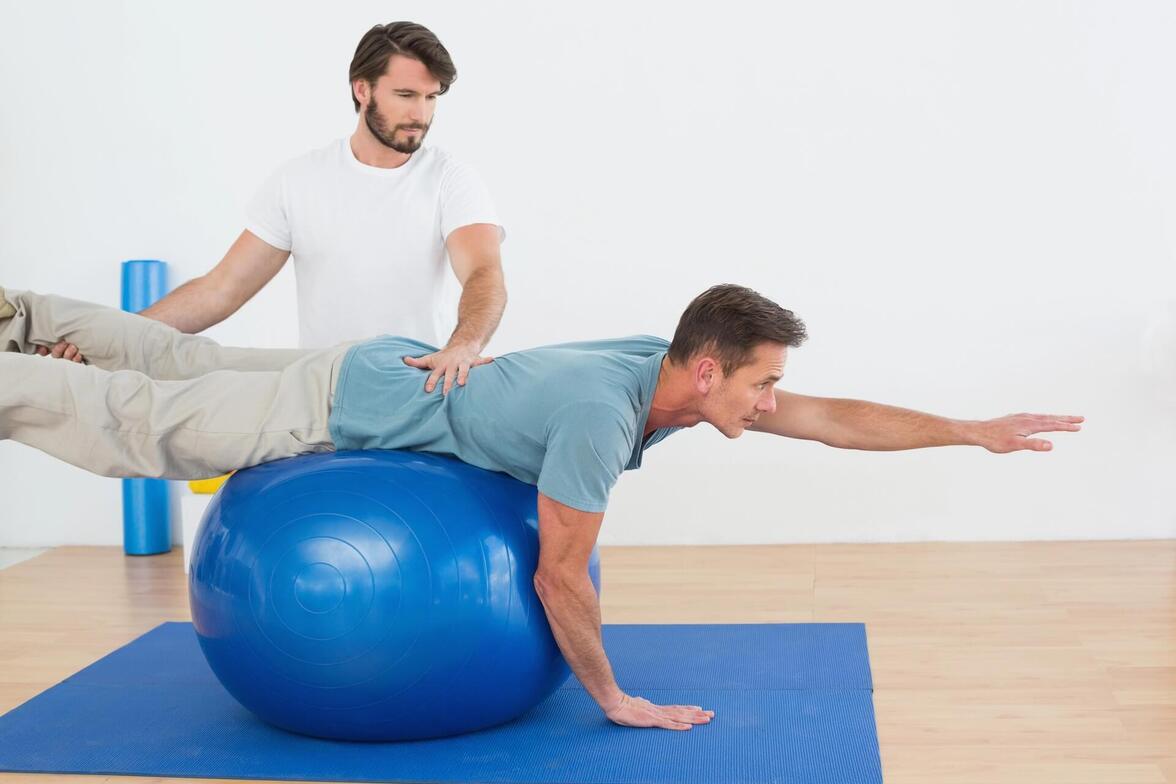
Once the motion returns, we layer in stability, strength work, motor control drills, and sport-specific movement retraining.
3. Reinforce through your sport
We watch you lift, run, golf, carry, hinge, squat, or jump. Your rehab must reflect your goals, or it won’t hold up under real-world load.
This is how you prevent injuries before they start — not with more stretching or more brute strength, but with intelligent movement re-education.
Simple Ways to Start Improving Mobility and Stability Today
Here are a few principles that make a big difference:
- Move often, not just intensely.
- Earn positions before you load them.
- Train through full ranges of motion when possible.
- Address old injuries you’ve been ignoring.
- If something always feels tight, stop stretching and evaluate why.
Ready to Train Smarter and Protect Your Body Long-Term?
Mobility and stability aren’t “nice to have.” They are the foundation of feeling strong, moving well, and staying injury-free as an active adult.
If you want to understand exactly what your body needs — what to mobilize, what to stabilize, and what to stop doing — we’re here to guide you.
Book your free discovery visit today, and let’s build a body that performs the way you want it to.