You can still play 18 holes. Your swing is still there. But somewhere along the way, your body started making golf feel a little harder than it used to.
Maybe it takes longer to loosen up before a round. Your back gets tight on the back nine. Or you can play one day without a problem, but playing a few days in a row leaves you sore and stiff.
You don’t necessarily want to stop playing. You want your body to keep up with how much you want to play. That’s one reason golfers may start looking into mobility work like ELDOA.
Can ELDOA Help Golfers Move and Recover Better?
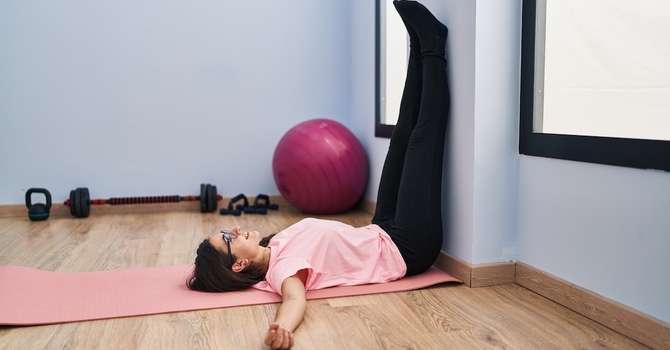
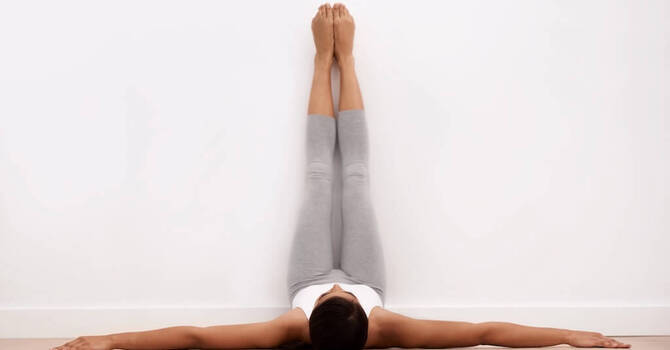
For golfers whose assessment identifies a specific movement restriction, ELDOA offers a valuable, more targeted way to work on golf mobility. Unlike a generic golf stretch, ELDOA uses precise active positions to target specific joints or areas of the body.
If the stiff back nine and the longer warm-ups sound familiar, that’s the territory where targeted mobility work earns its place.
ELDOA in Brief
ELDOA is a system of active positions created by French osteopath Guy Voyer, DO, built around the spine and its joints. That can make it especially interesting for a sport like golf, where your ability to move and rotate matters with every swing. To see how the positions work in more depth, read our guide to what ELDOA is,
Why Rotation Matters in Golf
A golf swing asks a lot from your body. Your hips rotate. Your upper back rotates. Your shoulders move. Your core helps transfer force. All of those pieces have to work together to create a smooth swing.
When one area doesn’t move as well as it should, your body usually doesn’t just stop. It finds another way. Limited rotation through the upper back, for example, means other parts of your body may contribute more to help you finish the swing. You might still be able to hit the ball.
But over 18 holes, hundreds of practice swings, or several days of golf in a row, those small changes can start to add up. That’s when golfers may notice more stiffness, soreness, or a swing that feels more like work.
Why Golfers May Need More Than Stretching
When you feel stiff before a round, it makes sense to stretch. And there’s nothing wrong with that. The problem comes when you keep stretching the same areas without asking why they keep getting tight. You can spend 20 minutes stretching your back before every round and still have the same problem by hole 12.
That’s because feeling tight doesn’t automatically mean you need more flexibility. You may need more movement at a specific area. You may need better control of the movement you already have. Or another part of your body may not be doing enough, which forces the area that feels tight to work harder. That’s where being more specific can help.
How ELDOA Fits Into Golf Mobility
ELDOA is a movement tool that can be used to work on specific areas of the body. For a golfer who has limited movement through an area of the spine, an ELDOA exercise can become part of a plan to work on that restriction.
The exercises are active, meaning you don’t simply relax into a stretch. Your arms, legs, feet, head, and pelvis may all need to be in certain positions while you create tension throughout your body. That allows the exercise to be much more targeted than simply twisting your back from side to side before you tee off.
Can ELDOA Improve Your Golf Swing?
Not directly, but it can change what your swing has to work with. ELDOA isn’t a golf stretch or a swing-coaching system, and it isn’t designed to fix your technique or magically add yards to your drive.
Here is where it can matter. If your swing has been working around a restriction, addressing it can give your body something it didn’t have before: more movement to work with and fewer workarounds to rely on. Available rotation is the raw material a swing uses to build force, and ELDOA can help make more of it available. When a restriction is part of the picture, that’s a smart place to start.
You Need to Be Able to Use the Mobility You Have
Control is the piece that’s easy to overlook. Think about the difference between lying on the floor doing a mobility exercise and standing over a golf ball trying to hit a drive. One is controlled and predictable. The other requires your body to rotate, create force, stay balanced, and coordinate everything in a fraction of a second.
That’s why mobility and stability have to work together. If ELDOA helps you gain movement at a specific area, that movement then has to be reinforced. Think of it as a progression: mobility to get into position, stability to control it, strength to load it, golf-specific movement to use it at speed, and capacity to repeat it round after round.
The goal isn’t simply to become more flexible. The goal is to have the movement your golf swing needs and be able to use it.
Why You May Feel Fine for One Round but Not Three
This is something a lot of golfers notice. You can play one round and feel pretty good. Then you go on a golf trip or play several days in a row, and by the later rounds your back is tight, your hips feel stiff, and warming up takes longer.
That doesn’t necessarily mean your body can’t handle golf anymore. It may mean your current capacity isn’t matching the amount of golf you’re asking it to handle. There’s a difference between being able to complete an activity once and being able to recover well enough to do it again tomorrow. That’s where mobility, strength, control, and recovery all matter.
ELDOA can be one piece of that plan when improving movement at a specific area makes sense. But if you feel fine after one round and struggle as your golf volume goes up, the question isn’t simply which stretch to add. An assessment can show what your body isn’t currently tolerating well, and what needs to change so you can keep playing.
What Your Golf Swing Can Reveal About Your Movement
Sometimes you don’t notice a mobility problem during everyday life. Walking around feels fine. Going up the stairs feels fine. Even working out may feel fine. Then you try to rotate through a golf swing and suddenly something feels restricted.
Golf asks your body to move in ways daily life doesn’t, which is why the swing can reveal limitations you might not notice anywhere else. The first step is figuring out what your swing is asking for that your body isn’t currently giving it.
How We Use ELDOA With Golfers at Strive2Move
At Strive2Move, we don’t want to give you mobility work just because you play golf. We want to know what your body needs for your game, so we look at how your hips, spine, shoulders, and the rest of your body move together.
For golfers in Martinsville and nearby New Jersey communities, that assessment can help determine whether limited mobility, strength, control, or another factor is affecting the way you move on and off the course, from post-round stiffness to recurring back pain.
If we find an area where ELDOA makes sense, we can use a specific exercise to work on that movement. From there, we build the strength and control needed to actually use it when you swing. The goal isn’t to have the best mobility routine at the course. It’s to play as much golf as you want without constantly wondering how your body is going to feel afterward.
If your swing still works but your body isn’t recovering from golf the way you’d like, start with a free Discovery Visit. It includes sport-specific assessment, so we can see how your body handles the demands of golf, where you’re limited, and what may help you keep playing the game you love.
Key Takeaways
- Golf takes coordinated mobility, strength, balance, and control.
- Feeling tight doesn’t automatically mean you need more stretching.
- ELDOA uses specific active positions to target particular areas.
- Mobility gains still need to be reinforced with strength and movement control.
- Golfers who feel fine after one round but struggle after several may need to look at overall capacity and recovery.
- ELDOA can be one valuable component of a larger golf performance or rehabilitation plan.
Frequently Asked Questions
Is ELDOA good for golfers?
It can be, when an assessment shows a specific movement restriction. Its precise active positions make it a good fit for that kind of targeted work, and it works best alongside strength work and golf-specific movement.
Can ELDOA improve golf rotation?
It can help address a mobility limitation that’s holding rotation back. Rotation only helps your game if you can control it and use it at speed, so it works best paired with strength and golf-specific movement.
Does ELDOA help golf back pain?
ELDOA can be one useful tool when a movement restriction is contributing to back tightness after golf, but back pain has many possible sources and ELDOA isn’t a universal treatment. If your back keeps tightening up or hurting after rounds, it’s worth finding out why. Pain with numbness, weakness, or symptoms traveling down the leg should be evaluated promptly.
What are the best mobility exercises for golfers?
There isn’t one list that works for every golfer, which is why generic golf mobility routines often miss. The right exercises depend on where you’re restricted and what your swing is asking of you, and an assessment shows which.
Should golfers stretch before or after playing?
Both can feel good. A warm-up that moves your body the way golf will ask it to move is a sensible way to start a round, and gentle stretching afterward can help you feel looser. Neither replaces finding out why the same areas keep tightening up.
How can I recover between rounds of golf?
Recovery comes down to whether your body’s capacity matches the amount of golf you’re playing. If you feel fine after one round but stiff and sore by the third, that’s a signal to look at your strength, mobility, and control, not just to add another stretch. If a golf trip is coming, build up to it: keep strength work in your week and ease into back-to-back days instead of jumping straight into your full schedule.
Can a chiropractor help with golf mobility?
A chiropractor who works with golfers can assess how you move, identify what’s limiting you, and build a plan that combines mobility, strength, and movement control. At Strive2Move in Martinsville, NJ, the starting point is a free Discovery Visit with a sport-specific assessment, so we can see what’s limiting how you move on the course.
Strive2Move | 1910 Washington Valley Rd, Suite 4, Martinsville, NJ 08836 | (908) 547-0729